>
>
Human rights monitors raise concerns over protections for women and minors amid uneven legal enforcement in Iraq
Human rights monitors raise concerns over protections for women and minors amid uneven legal enforcement in Iraq
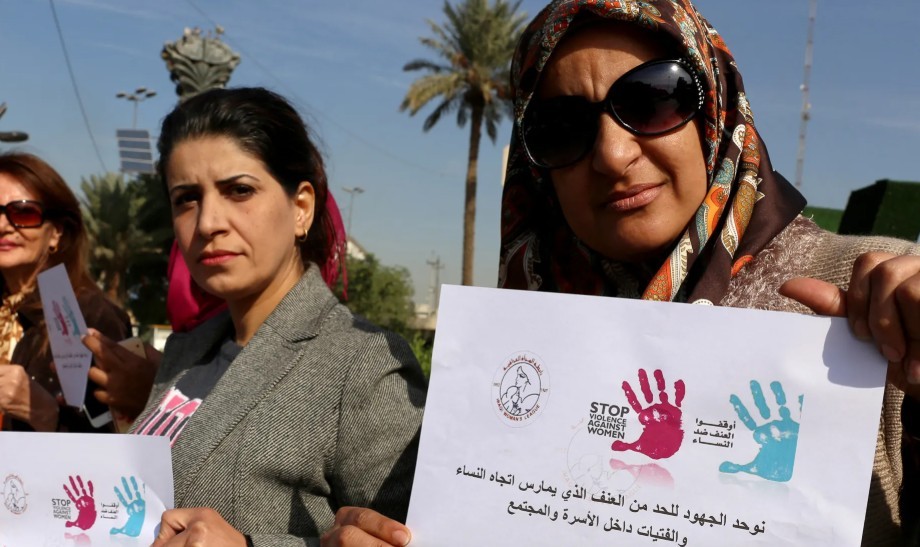
Human rights monitors and governance-focused reports highlighted continuing concerns regarding the protection of women and minors in Iraq,

Abdulla Shakir Mahmood
AUTHOR NOTE:
What emerges from these repeated concerns is not a single event, but a structural gap between law and lived reality.
On paper, Iraq has legal frameworks intended to protect women and minors. In practice, enforcement depends heavily on local capacity, institutional stability, and sometimes political or social pressures that vary significantly from one region to another. This creates a situation where rights are not uniformly experienced, but instead shaped by geography, governance strength, and access to institutions.
The deeper problem is not simply legal design—it is implementation. A law that exists but is unevenly applied loses its protective function. And when enforcement systems are fragmented, vulnerable groups are left relying on inconsistent support structures that may or may not respond effectively when needed.
This does not point to a single actor responsible for failure; rather, it reflects a broader governance challenge where institutional weakness, overlapping authorities, and long-standing instability collectively reduce the reliability of protection mechanisms. For those affected, the result is not abstract policy failure—it is uncertainty about whether the system will respond when it is needed most.
ARTICLE:
In late April 2026, human rights monitors and governance-focused reports highlighted continuing concerns regarding the protection of women and minors in Iraq, particularly in relation to inconsistent enforcement of legal safeguards across different المحافظات (provinces) and jurisdictions.
The reports point to gaps between formal legislation and practical enforcement, especially in cases involving domestic violence protection mechanisms, access to legal recourse, and child protection frameworks. In some areas, local enforcement capacity is described as uneven, with variations in how family law provisions and protective procedures are implemented.
Observers also noted that broader instability, administrative fragmentation, and overlapping authority structures between federal institutions and local or politically affiliated actors contribute to inconsistent application of protections. These issues are often compounded in rural or economically disadvantaged areas, where access to legal and social services is more limited.
About

This platform is run by one person, but it carries the voices of many. It exists for the people of Iraq who live in fear, who cannot speak freely, and whose stories are often ignored or erased. With limited resources but deep responsibility, I report on government and power not for influence or profit, but because truth still matters. When silence is forced, this space chooses to speak — carefully, bravely, and with humanity.
Featured Posts




Subscribe now to stay updated with top news!
Subscribe now to stay updated with all the top news, exclusive insights, and weekly highlights you won’t want to miss.