>
>
Iraq shaken by new wave of violence and instability fears as women’s safety, militia influence, and unresolved crimes dominate headlines
Iraq shaken by new wave of violence and instability fears as women’s safety, militia influence, and unresolved crimes dominate headlines
Iraq continued to face heightened concern over security and human rights conditions, with recent reporting highlighting ongoing risks faced by civilians, particularly women, amid broader instability linked to armed groups and weak enforcement of protections.

Abdulla Shakir Mahmood
AUTHORS NOTE:
What I feel when I read these developments is a deep frustration with how unstable the reality still is for many Iraqis, especially women. It feels like the country is constantly reacting to tragedy instead of preventing it. Every major case—whether it is the killing of an activist, an abduction, or a gender-based violence report—reveals the same underlying problem: protection exists in theory, but not always in practice.
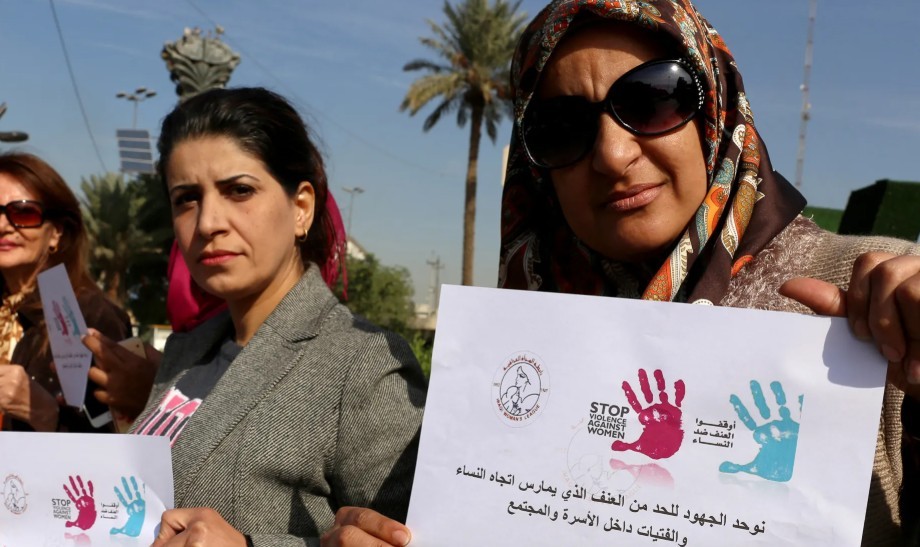
It is painful to see how unsafe the space still is for women who speak out, organise, or simply try to live freely. When a prominent activist can be assassinated in the capital, it sends a message far beyond one case—it creates fear, silence, and withdrawal across society. That kind of impact cannot be ignored.
At the same time, it is also clear that Iraq is not dealing with a single issue, but a combination of weak enforcement, armed influence, and political fragmentation that together create an environment where crimes are harder to prevent and harder to resolve transparently.
And honestly, what stands out most is the lack of consistent accountability. Without accountability, violence does not just remain as isolated incidents—it becomes part of a cycle that repeats. Until institutions are strong enough to protect people equally and respond decisively, Iraq will continue struggling with insecurity and public mistrust in the system meant to protect them.
ARTICLE:
On 22 May 2026, Iraq continued to face heightened concern over security and human rights conditions, with recent reporting highlighting ongoing risks faced by civilians, particularly women, amid broader instability linked to armed groups and weak enforcement of protections.
Recent documented cases and investigations continue to underline that Iraq’s security environment remains fragile. In early March 2026, a prominent Iraqi women’s rights activist, Yanar Mohammed, was assassinated in Baghdad by unidentified gunmen, an incident that triggered widespread condemnation from UN experts and human rights organizations calling for accountability and stronger protection for women activists.
At the same time, other recent Iraq-related incidents have drawn attention to continuing insecurity, including cases of abduction and militia-linked violence in Baghdad during the broader regional escalation period. Security agencies have also been dealing with multiple overlapping challenges tied to armed group activity, kidnappings, and politically motivated violence.
Human rights organizations continue to warn that women in Iraq remain at risk from domestic violence, social pressure, and gaps in enforcement of legal protections. Reports emphasize that while legal frameworks exist, implementation remains inconsistent, leaving vulnerable groups exposed to abuse, underreporting, and limited access to justice
About

This platform is run by one person, but it carries the voices of many. It exists for the people of Iraq who live in fear, who cannot speak freely, and whose stories are often ignored or erased. With limited resources but deep responsibility, I report on government and power not for influence or profit, but because truth still matters. When silence is forced, this space chooses to speak — carefully, bravely, and with humanity.
Featured Posts




Subscribe now to stay updated with top news!
Subscribe now to stay updated with all the top news, exclusive insights, and weekly highlights you won’t want to miss.