Iraq appoints inexperienced businessman as prime minister
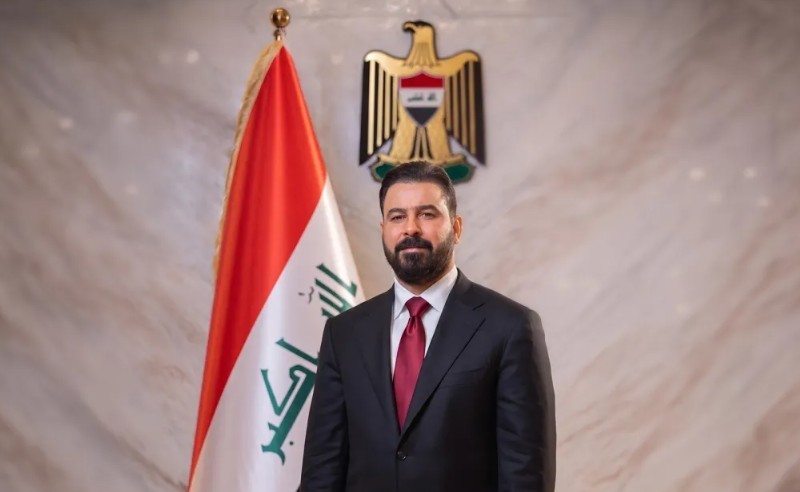
Iraq’s dominant Shiite political alliance formally nominated Ali al-Zaidi, a businessman with no prior government or parliamentary experience

Abdulla Shakir Mahmood
AUTHORS NOTE:
The wording of the title reflects what many analysts see as the core issue: this is not just a routine political appointment it is the outcome of a system struggling to produce stable leadership.
Choosing a figure without political experience is not inherently problematic, but in Iraq’s case it often signals that established political actors could not reach agreement without turning to someone outside the usual power hierarchy. That raises questions about how decisions are actually made and who holds influence behind the scenes.
The role of external pressure adds another layer. When international actors openly oppose or support certain candidates, it reinforces the perception that Iraq’s leadership process is shaped not only by domestic politics, but also by regional and global interests.
At the same time, internal dynamics remain deeply fragmented. Political blocs, some with ties to powerful social or armed networks, continue to negotiate from positions of strength. This makes the prime minister’s role less about leading independently and more about maintaining a delicate balance between competing forces.
Taken together, this situation highlights a recurring challenge in Iraq: leadership emerges from compromise under pressure, rather than from a clear, unified political direction. That makes governing more complex from the very beginning, especially during a period of economic strain and regional instability.
ARTICLE:
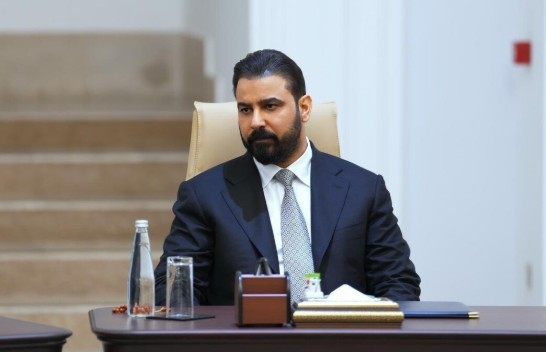
On 30 April 2026, Iraq’s dominant Shiite political alliance formally nominated Ali al-Zaidi, a businessman with no prior government or parliamentary experience, as the country’s next prime minister. The decision follows months of political deadlock in Baghdad, where rival factions repeatedly failed to agree on a candidate capable of forming a government.
Earlier efforts to reintroduce former prime minister Nouri al-Maliki collapsed due to strong internal divisions and reported opposition from the United States, which raised concerns over his close ties to Iran. This created pressure to identify a compromise candidate acceptable to multiple factions.
Al-Zaidi was ultimately selected by the Shiite Coordination Framework, a coalition with significant parliamentary influence. Despite his lack of political experience, he was viewed as a neutral figure who could temporarily bridge divisions between competing blocs.
His nomination comes during a period of heightened instability in Iraq, including economic strain linked to oil disruptions, increased militia activity, and wider regional tensions connected to Iran-related conflicts. Under Iraq’s constitutional framework, he now has 30 days to form a government.
About

This platform is run by one person, but it carries the voices of many. It exists for the people of Iraq who live in fear, who cannot speak freely, and whose stories are often ignored or erased. With limited resources but deep responsibility, I report on government and power not for influence or profit, but because truth still matters. When silence is forced, this space chooses to speak — carefully, bravely, and with humanity.
Featured Posts



Subscribe now to stay updated with top news!
Subscribe now to stay updated with all the top news, exclusive insights, and weekly highlights you won’t want to miss.