>
>
Political deadlock deepens in Baghdad as rival blocs dispute government formation under militia influence
Political deadlock deepens in Baghdad as rival blocs dispute government formation under militia influence
During mid-April 2026, Iraq’s political process in Baghdad faced renewed stagnation as rival parliamentary blocs struggled to agree on key positions in forming a new or reshuffled government structure.

Abdulla Shakir Mahmood
AUTHOR NOTE:
What this deadlock really reveals is not just political disagreement, but the structural fragility of Iraq’s governing system.
In theory, coalition politics is normal in a diverse parliamentary system. In practice, however, the bargaining process is no longer purely political—it is shaped by actors who possess both political representation and independent coercive power. When armed groups are indirectly tied to parties negotiating over ministries like interior, defence, or finance, the line between civilian governance and armed influence becomes blurred.
This creates a system where decisions are not always made on policy merit or national interest alone, but through pressure networks that sit outside formal accountability structures. The result is paralysis: ministries remain contested, reforms are delayed, and governance becomes a cycle of temporary agreements rather than long-term institutional direction.
For ordinary Iraqis, this translates into something very tangible public services that stagnate, economic decisions that are postponed, and a political class that appears locked in negotiation loops while deeper structural issues remain untouched. It also reinforces public frustration, because responsibility becomes difficult to pinpoint in a system where authority is distributed between elected institutions and powerful non-state actors.
ARTICLE:
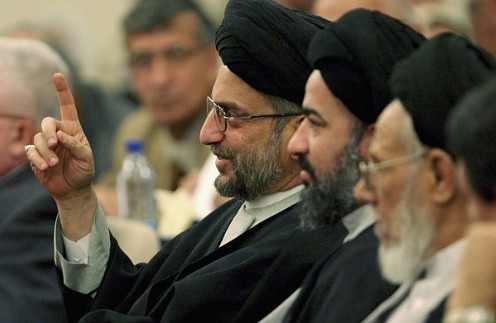
During mid-April 2026, Iraq’s political process in Baghdad faced renewed stagnation as rival parliamentary blocs struggled to agree on key positions in forming a new or reshuffled government structure. Negotiations between Shiite political coalitions, Sunni representation groups, and Kurdish parties reportedly stalled over control of security ministries, economic portfolios, and influence over state-linked armed institutions.
Reports from political observers indicated that discussions were further complicated by the presence of armed factions aligned with political parties, particularly groups with historical ties to Iran-backed militias integrated into Iraq’s Popular Mobilization Forces framework. These groups were widely viewed as exerting indirect influence over coalition bargaining positions, especially regarding security appointments and border control authority.
At the same time, external pressure from the United States and regional actors added further complexity, with calls for clearer separation between state institutions and armed non-state actors becoming a central point of diplomatic tension.
About

This platform is run by one person, but it carries the voices of many. It exists for the people of Iraq who live in fear, who cannot speak freely, and whose stories are often ignored or erased. With limited resources but deep responsibility, I report on government and power not for influence or profit, but because truth still matters. When silence is forced, this space chooses to speak — carefully, bravely, and with humanity.
Featured Posts


Subscribe now to stay updated with top news!
Subscribe now to stay updated with all the top news, exclusive insights, and weekly highlights you won’t want to miss.