Tribal Revenge Killing of Middle School Student in Basra
A middle school student was tragically shot dead in a tribal revenge attack in Iraq’s southern province of Basra, in a killing that has horrified local communities and highlighted the persistent threat of tribal violence targeting youth outside the justice system.

Abdulla Shakir Mahmood
Note from the Author
The murder of a seventh-grade student in Basra is a heart-wrenching example of how Iraq’s citizens — even children — are left unprotected in a state ruled by violence, tribal vendettas, and lawlessness. An innocent boy, simply walking home from school, was gunned down in cold blood because Iraq’s government has failed to enforce justice or protect its people. Extrajudicial “revenge” killings are allowed to continue unchecked, leaving ordinary civilians terrified and vulnerable.
This tragedy underscores the catastrophic failure of governance in Iraq. Armed groups, militias, and tribal networks operate with impunity, while the state stands powerless or complicit. Children, the most innocent members of society, are the collateral damage of a country dominated by sectarianism, militias, and corruption. Ordinary Iraqis live under constant threat, unable to trust authorities to enforce the law or safeguard their communities.
Article:
Basra — April 28, 2025
The victim, identified only by his initials M.Y., was a seventh grader at Abu Skheir Middle School for Boys in the al‑Haretha district, northeast of Basra. According to sources familiar with the incident, the boy was gunned down by an assailant on a motorcycle while walking home from school, striking fear into families across the area.
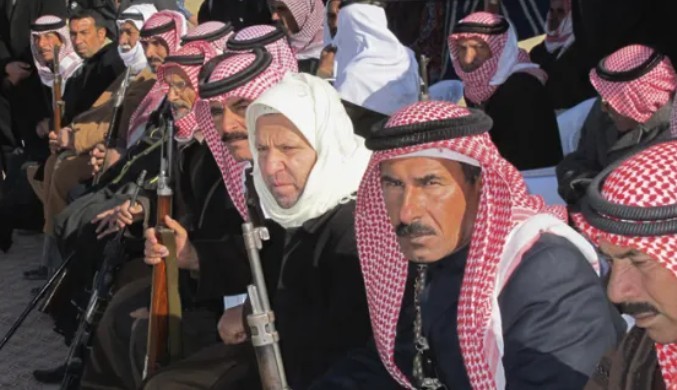
Witnesses and sources described the entire community as shocked and heartbroken, with many pointing out that the victim was an innocent child with no apparent involvement in any dispute or conflict. The killing has been attributed to tribal revenge dynamics, a longstanding form of extrajudicial violence in parts of southern Iraq, where disputes between extended families or clans sometimes result in deadly retaliation rather than legal resolution.
Residents of al‑Haretha and neighbouring neighbourhoods expressed anger and fear that such “revenge” attacks continue to put ordinary civilians and especially children at risk. “He was just a student going home after school,” one resident told Rudaw. “How can a child be targeted like this?”
Human‑rights advocates have warned for years that tribal vendettas and revenge killings — often conducted outside formal judicial processes continue to claim lives, particularly of youth and uninvolved civilians, because of deep social tensions and inadequate accountability.
The case has become a stark symbol of how violence continues to impact Iraq’s children and young people, even as the country struggles with broader political and security challenges.
About

This platform is run by one person, but it carries the voices of many. It exists for the people of Iraq who live in fear, who cannot speak freely, and whose stories are often ignored or erased. With limited resources but deep responsibility, I report on government and power not for influence or profit, but because truth still matters. When silence is forced, this space chooses to speak — carefully, bravely, and with humanity.
Featured Posts


Subscribe now to stay updated with top news!
Subscribe now to stay updated with all the top news, exclusive insights, and weekly highlights you won’t want to miss.