Nouri al-Maliki’s Comeback Sparks Fears of Repeat Abuses Against Sunnis
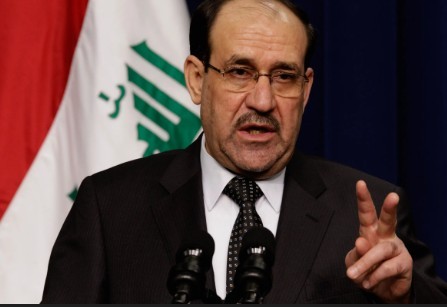
Former Iraqi Prime Minister Nouri al-Maliki has returned to the political spotlight after being nominated for a third term as Prime Minister, backed by the Shiite Coordination Framework, a move that has ignited sharp political and public divisions amid an ongoing power struggle

Abdulla Shakir Mahmood
Note from the Author
The potential return of Nouri al‑Maliki exposes the terrifying reality of Iraq’s sectarian, authoritarian, and failed governance. Under his previous terms, the state apparatus became a weapon of repression: Sunni-majority neighborhoods faced arbitrary arrests, violent raids, enforced disappearances, and extrajudicial killings. Families lived in terror, communities were shattered, and public trust in the government was destroyed. These heavy-handed policies did not just oppress citizens — they fueled insurgency, sectarian division, and the very conditions that allowed ISIS to rise.
This is the price of a government dominated by sectarian agendas and militias, where law and justice are subordinated to ideology and personal power. Iraq cannot afford a return to leaders who prioritize sectarian dominance over national unity and citizen safety. The state must serve all citizens equally, not target one community while favoring another.
Our mission has never been clearer: Iraq must be secular, law-based, and free from sectarian, militia, or religious domination. Governance must be accountable, professional, and committed to protecting all citizens, not oppressing them. Until Iraq rejects leaders who weaponize the state and dismantles sectarian influence, repression, fear, and instability will continue to threaten every Iraqi family.
Article:
Local sources and journalists have reported that Maliki often ran the state apparatus in an extremely centralized and heavy-handed manner, with security operations in Sunni-majority areas marked by harsh raids, arbitrary arrests, and violent crackdowns, leaving deep scars on social cohesion and public trust in the state.
The recent nomination has reignited fears among Sunni politicians, civil society, and human-rights advocates that a return to power could repeat past patterns of repression and marginalization, potentially destabilizing Iraq further and undermining prospects for national reconciliation.
During his previous terms, thousands of Sunni civilians were arrested arbitrarily, often during violent security sweeps in Sunni-majority cities. Reports from human-rights organisations at the time documented raids on homes, torture in detention centers, enforced disappearances, and extrajudicial killings. Families frequently received no information about their missing relatives for weeks, leaving communities in terror.
Security operations under Maliki’s government were widely criticised as targeting Sunni neighborhoods systematically, with allegations that neighborhoods were bombarded, detainees beaten and executed, and Sunni political leaders marginalized or removed from office. Analysts say these policies fueled anger, insurgency, and ultimately created conditions that allowed ISIS to gain a foothold in Iraq’s north and west.
“This is not just politics — it is a memory of brutality,” said a former Sunni member of parliament. “For many Iraqis, Maliki’s return raises the terrifying possibility that the state could once again be used as a weapon against Sunni communities.
About

This platform is run by one person, but it carries the voices of many. It exists for the people of Iraq who live in fear, who cannot speak freely, and whose stories are often ignored or erased. With limited resources but deep responsibility, I report on government and power not for influence or profit, but because truth still matters. When silence is forced, this space chooses to speak — carefully, bravely, and with humanity.
Featured Posts


Subscribe now to stay updated with top news!
Subscribe now to stay updated with all the top news, exclusive insights, and weekly highlights you won’t want to miss.