Religious political influence intensifies legal divisions in Iraq
Iraq continued to face deep political division over proposed changes to the Personal Status Law, with religiously aligned political blocs

Abdulla Shakir Mahmood
AUTHORS NOTE:
I don’t think people fully grasp what this actually means for Iraq’s future. This isn’t just a legal argument—it is a fight over whether Iraq is moving toward a unified civil state or drifting into a fragmented system where different groups apply different interpretations of law depending on religion and political influence.
When law becomes tied to religious or sectarian interpretation, it stops being equal for everyone. It becomes conditional. And once that happens, you no longer have a single justice system—you have multiple versions of it depending on who you are, where you live, and which authority has influence over your case.
What is most worrying is not just the debate itself, but the pattern behind it. Instead of strengthening state institutions and building a modern legal framework that protects everyone equally, Iraq keeps getting pulled into repeated political battles over identity, religion, and authority. These battles slow down governance, weaken legal consistency, and create long-term uncertainty for citizens.
This constant institutional friction is damaging in a deeper way than people admit. It affects women’s rights, family stability, court credibility, and even public trust in whether the law is fair or predictable. When people start believing that justice depends on interpretation rather than clear law, the entire system becomes weaker.
The real problem is not religion itself—it is the politicization of religion inside state institutions. Once that line becomes blurred, governance stops being neutral, and the state struggles to function as a unified authority. Iraq is still stuck in that tension, and until it is resolved, legal and political instability will continue to repeat itself.
ARTICLE:
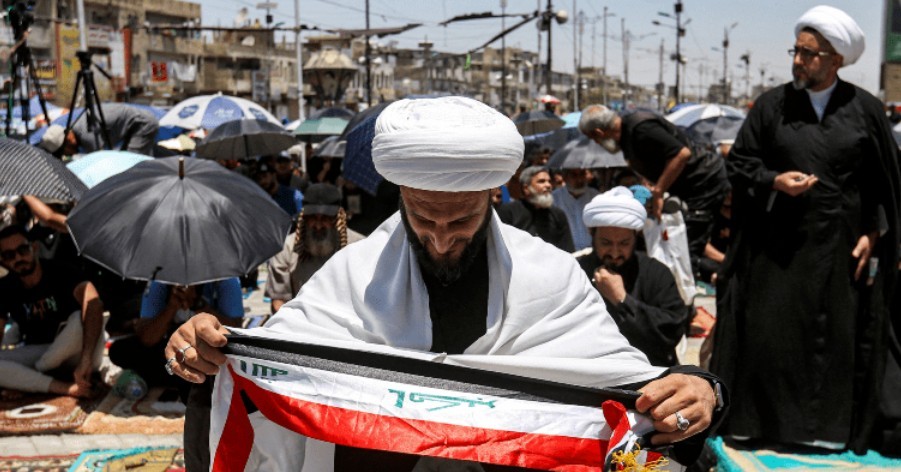
On 15 May 2026, Iraq continued to face deep political division over proposed changes to the Personal Status Law, with religiously aligned political blocs supporting amendments that would expand the role of Islamic jurisprudence in family-related legal matters, including marriage, divorce, and inheritance.
The debate has been ongoing in parliament and remains one of the most controversial legal issues in Iraq’s post-2003 political system. Supporters of the amendments argue that they reflect religious and cultural identity, while opponents warn that they could weaken unified civil legal protections and increase inconsistencies in how family law is applied across different regions and communities.
Civil society groups and legal experts have repeatedly raised concerns that expanding religious jurisdiction in personal law could lead to fragmented legal standards, where outcomes in family courts depend heavily on interpretation by sect-specific authorities rather than a single national civil code. Women’s rights organizations have also warned that such changes could reduce legal protections in cases involving marriage age, custody, and divorce proceedings.
The dispute reflects a broader structural feature of Iraq’s political system, where religiously aligned parties play a significant role in coalition governments and legislative decision-making, particularly on socially sensitive issues.
About

This platform is run by one person, but it carries the voices of many. It exists for the people of Iraq who live in fear, who cannot speak freely, and whose stories are often ignored or erased. With limited resources but deep responsibility, I report on government and power not for influence or profit, but because truth still matters. When silence is forced, this space chooses to speak — carefully, bravely, and with humanity.
Featured Posts


Subscribe now to stay updated with top news!
Subscribe now to stay updated with all the top news, exclusive insights, and weekly highlights you won’t want to miss.