Shams's Story — Part 2: Religion, Power and the Politics of a Girl's Body
In 2025, Iraq rewrote the rules for girls. A new religious code ties marriage to “puberty”, gives fathers custody of children at seven, and makes a woman’s rights depend on her sect. Shams looks at the politicians, clerics and Iran-aligned militias behind it, and why she refuses to be sent back to them.

Abdulla Shakir Mahmood

My fear has a political address
In Part 1, I wrote about the life I am afraid of. In this part I want to name what stands behind that fear, because it is not just "culture" or "tradition". It is politics.
In Iraq today, a girl's future is being decided in parliament, in religious offices and in the back rooms of armed parties, many of them closely tied to Iran. Laws about marriage, divorce and children have become tools in a fight over sect, identity and power. Girls like me are the ones who pay for it.
I want to be clear about one thing first. This is not an attack on Islam, or on any sect, or on the millions of believers in Iraq who want their daughters safe and free. Many religious Iraqis have fought these changes too. My anger is with the people who use God's name to take power over women's lives.
2025: the year Iraq rewrote the rules for girls
For more than 60 years, Iraqi families lived under the Personal Status Law of 1959. It was far from perfect, but it set a clear line: a girl could not marry before 18, or 15 with a judge's permission. It applied to everyone, whatever their sect.
In 2025, Shia Islamist parties tore a hole in that line. Here is how it happened:
21 January 2025: Parliament passed an amendment letting couples choose religious rules instead of the civil law. It was not voted on by itself. It was bundled into one vote with two unrelated laws, so MPs could not reject it without rejecting the others.
17 February 2025: The amendment took effect, after a court challenge over the way the vote was held was overturned.
27 August 2025: Parliament approved a new "Ja'afari" code of more than 300 articles, written by Shia religious authorities.
The amendment had promised the new code would not go below the 1959 marriage age. But the code approved in August ties marriage to "puberty", which could mean girls as young as nine or ten.
The code also:
hands custody of children to the father automatically at age seven, or as soon as the mother remarries
lets a husband divorce his wife without even telling her
lets a husband switch the marriage to the religious code without his wife's knowledge or consent
allows marriages that are spoken, unwitnessed and never registered
Unregistered marriages are how child marriage hides. The UN found that a third of marriages in Iraq were already unregistered, and 22% of those involved girls under 14. UNICEF says 28% of Iraqi girls are married before 18.
A woman named Ghazal, divorced for ten years, was summoned to court in September 2025. Her ex-husband wanted the new code applied backwards so he could take their 10-year-old son. That is what this law means in real life: no woman is safe, not even the ones who thought their battles were over.
When a sect replaces citizenship
The most dangerous idea in the new law is simple: your rights now depend on your sect.
Two Iraqi girls can grow up on the same street, in the same city, under the same flag, and have completely different futures. Take inheritance: a daughter from a Sunni family can inherit land, while her Shia neighbour is denied it. The same goes for custody, divorce and how young a girl can be married. One Iraqi news outlet described the code as turning "citizenship into sect", with women as the test case.
The code also moves power away from judges and into religious offices. When a wife asks for divorce, a judge can grant it only for abandonment, lack of support or repeated physical abuse. Even then, a religious authority must approve the ruling and can overturn it. Psychological, sexual and financial abuse do not count at all.
And questioning it carries a price. When the lawyer Mohammed Juma'a warned that the changes would drag Iraqi women back to the age of slave girls, he was referred to a disciplinary council for saying so.
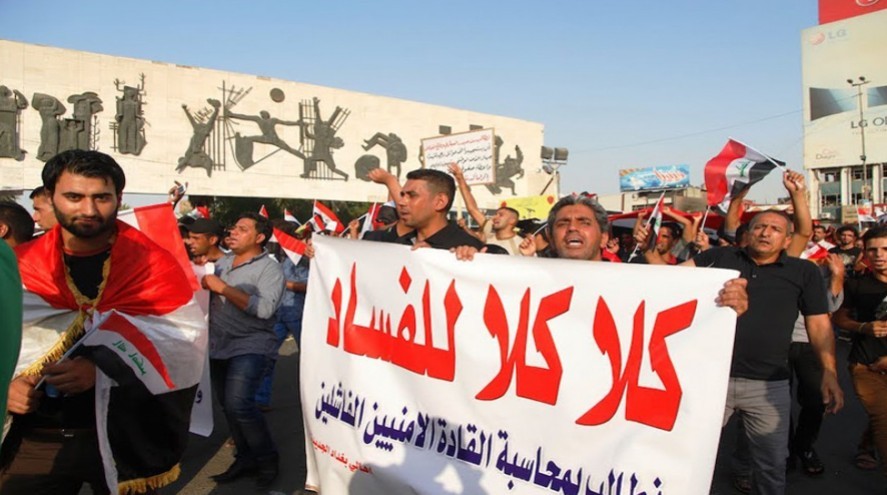
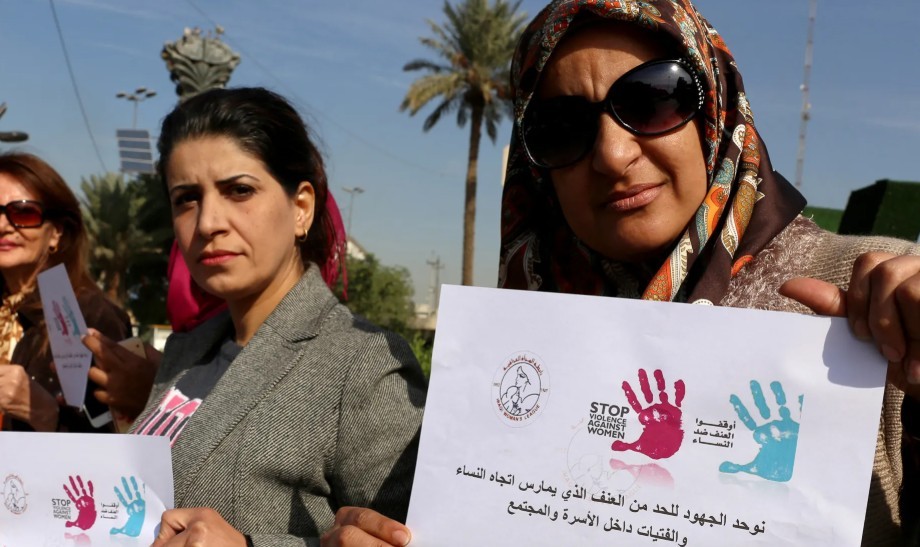
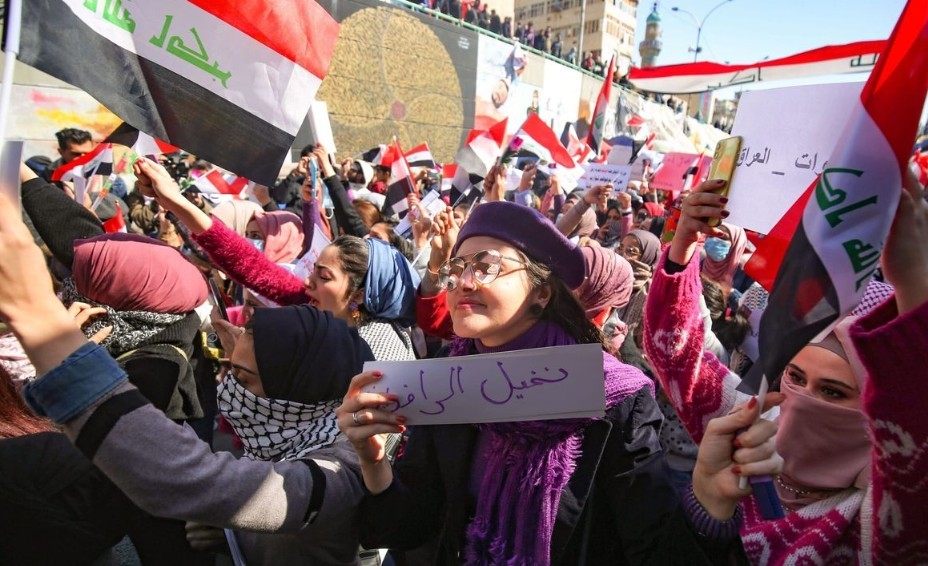
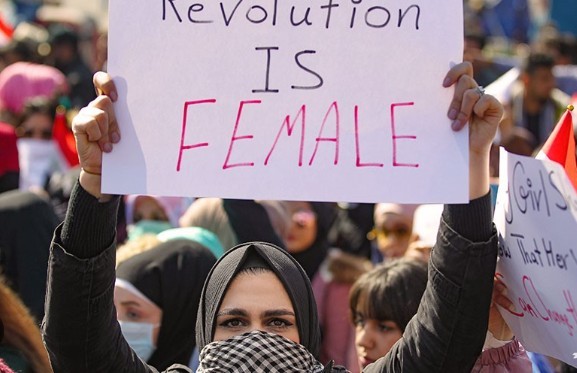
Not every religious voice wanted this. Sunni scholars refused to write a code of their own, and their communities still follow the 1959 law. Women's groups, lawyers and secular politicians protested in the streets of Baghdad. Former prime minister Iyad Allawi called the law "a disaster that must be stopped". It passed anyway.
Iran's shadow over Iraq
You cannot talk about power in Iraq without talking about Iran.
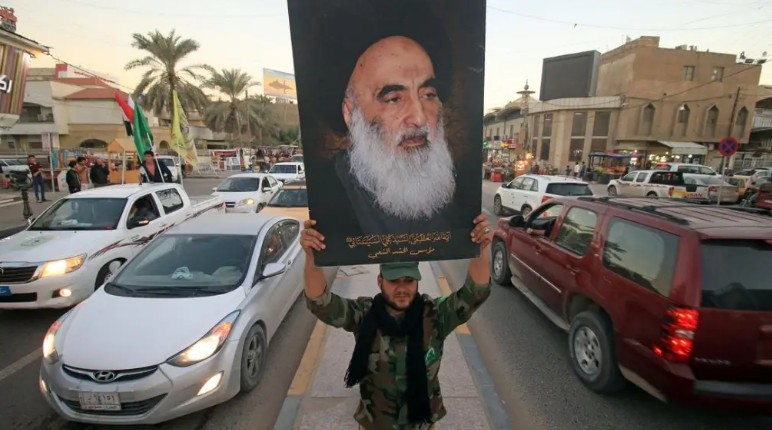
The Shia parties that dominate Iraq's government sit together in the Coordination Framework, a coalition widely described as Iran-aligned. In April 2026, it was this bloc that nominated Ali al-Zaidi as Iraq's new prime minister. Iran is linked to more than a dozen Iraqi parties, including the Dawa Party, the Islamic Supreme Council and the Badr Organisation.
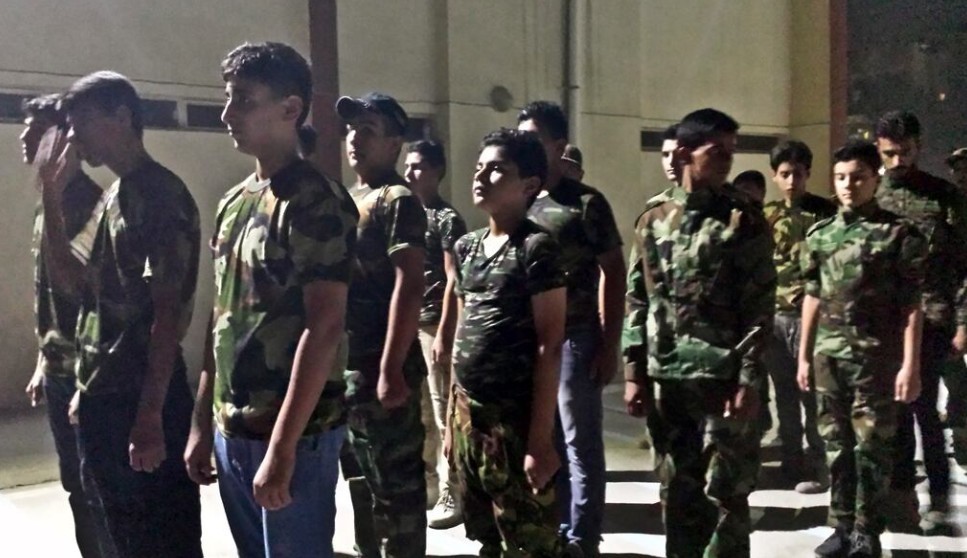
Badr was founded inside Iran in 1982. Today, groups like Badr, Kata'ib Hezbollah and Asa'ib Ahl al-Haq are not just militias. They hold seats in parliament, run businesses and are embedded in Iraq's ministries. Security officials estimate the hardline factions alone command about 50,000 fighters. In 2021, the head of Iraq's Popular Mobilisation Forces stood in Tehran beside the commander of Iran's Revolutionary Guards and called it a "duty" to use the Guards' experience in Iraq.
I am not saying Tehran wrote Iraq's marriage law. But the parties that pushed it belong to the same political world Iran has spent decades building. And Iran itself shows exactly where that road leads.
Iran: the warning next door
In the Islamic Republic of Iran, the legal marriage age for a girl is 13. Younger girls can still be married if their father agrees and a judge approves. In 2020 alone, Iran's own Statistics Centre recorded 31,379 marriages of girls aged 10 to 14, a rise of more than 10% in one year. Those are only the marriages that were registered.
That is what happens when religious rule is fused with state power and men decide what faith demands of girls. Iraqi women have watched Iranian women fight that system for decades. We do not want Iraq to follow it.
A state that won't protect us
If a girl in Iraq is threatened by her own family, where does she go? The honest answer is: almost nowhere.
Iraq still has no law against domestic violence. A draft was introduced in 2015, offering restraining orders, penalties and shelters. Some lawmakers blocked it, saying it clashed with religious and social values. It has been stuck for a decade.
Meanwhile, the laws that do exist work against women:
Article 41 of the Penal Code allows a husband to "discipline" his wife, as long as it fits "custom". In practice it is used to excuse beatings.
Article 128 allows lighter sentences for crimes committed in anger after "provocation", and is regularly used in so-called honour killings.
Article 409 caps the sentence at three years for a man who kills or injures a wife or female relative he accuses of adultery.
Now put these laws together with tribal power and armed parties that answer to no one. A girl who refuses a marriage, or runs from a violent home, is not just defying her father. She may be defying a tribe, a sheikh and men with guns and political protection. The police and courts that should shield her are often tied to the same networks.
This is why I am afraid. Not because of any one person, but because the whole system, from the penal code to parliament, is built to send a girl like me back to the people she is running from.
What has to change
Iraq's leaders like to say these laws protect faith and family. They protect neither. They protect power: the power of parties, clerics and armed men over the bodies and futures of girls.
Here is what I am asking for:
Repeal the Ja'afari code and restore one civil family law for every Iraqi, whatever their sect.
Set 18 as the minimum age of marriage, with no exceptions for "puberty", fathers or clerics.
Require every marriage to be registered in a court, so child marriages can no longer hide.
Pass the domestic violence law that has been blocked since 2015, and fund real shelters.
Abolish Articles 41, 128 and 409, so no man can claim "discipline" or "honour" as an excuse.
Keep foreign-backed militias out of women's lives, and out of the courts and police that should protect them.
To the world watching: when you hear that Iraq is "stable" now, ask stable for whom. A country can hold elections and still hand its daughters over to men who believe they own them.
I left because I want to choose my own life. I am telling you all of this so that no one can say they didn't know what a girl like me would be sent back to.
My faith is my own. My body is my own. My future is my own. No parliament, no cleric and no foreign power gets to decide otherwise.
About

This platform is run by one person, but it carries the voices of many. It exists for the people of Iraq who live in fear, who cannot speak freely, and whose stories are often ignored or erased. With limited resources but deep responsibility, I report on government and power not for influence or profit, but because truth still matters. When silence is forced, this space chooses to speak — carefully, bravely, and with humanity.
Featured Posts




Subscribe now to stay updated with top news!
Subscribe now to stay updated with all the top news, exclusive insights, and weekly highlights you won’t want to miss.