>
>
Drone breach over Baghdad’s Green Zone exposes Iraq’s inability to secure even its most protected state institutions
Drone breach over Baghdad’s Green Zone exposes Iraq’s inability to secure even its most protected state institutions
Iraqi security forces opened fire on an unidentified drone that entered the airspace above Baghdad’s heavily fortified Green Zone

Abdulla Shakir Mahmood
AUTHORS NOTE:
This incident is less about what the drone did and more about what it proved.
The Green Zone represents the core of Iraqi state authority. It is where the government operates, where foreign embassies are located, and where the country projects its image of control and stability. If a drone can enter that airspace, operate freely, and leave without being stopped, it challenges the assumption that the state has full control even over its most critical locations.
From a security perspective, this points to gaps in detection, response coordination, or both. Modern drone threats are not new, and Iraq has faced them before. The concern here is that despite experience and awareness, the response was still insufficient to prevent or neutralise the intrusion.
There is also a broader implication linked to non-state actors. In Iraq’s current environment, drones are not just tools—they are part of a wider pattern of asymmetric capability used by armed groups. Whether or not a specific group is confirmed responsible, the ability to carry out such an operation suggests that these capabilities remain active and accessible.
Finally, the psychological and political impact is significant. Incidents like this affect confidence both internally among citizens and externally among international partners. Security is not only about preventing damage; it is also about maintaining credibility. When breaches occur in the most protected areas, that credibility is inevitably questioned.
ARTICLE:
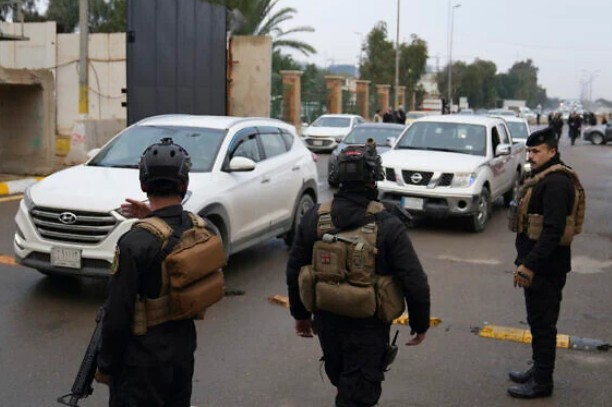
On 28 April 2026, Iraqi security forces opened fire on an unidentified drone that entered the airspace above Baghdad’s heavily fortified Green Zone the area that houses key government institutions, foreign embassies, and strategic command centres.
Despite multiple attempts to bring it down, the drone was able to evade interception and leave the area without being neutralised. No casualties or damage were reported, but the incident triggered immediate security alerts and heightened concern among Iraqi officials and foreign diplomatic missions operating in the zone.
Initial security assessments suggested the drone may have been used for surveillance rather than a direct strike. However, the breach itself raised alarms due to the symbolic and strategic importance of the location. The Green Zone is widely considered the most secure area in Iraq, protected by layered defence systems, checkpoints, and restricted airspace monitoring.
Authorities launched an investigation into the origin and purpose of the drone, including whether it was linked to Iran-aligned militia groups, which have previously used drones for reconnaissance and attacks in Iraq and the wider region. The incident occurred during a period of increased regional tension connected to Iran-related conflict dynamics and ongoing militia activity.
About

This platform is run by one person, but it carries the voices of many. It exists for the people of Iraq who live in fear, who cannot speak freely, and whose stories are often ignored or erased. With limited resources but deep responsibility, I report on government and power not for influence or profit, but because truth still matters. When silence is forced, this space chooses to speak — carefully, bravely, and with humanity.
Featured Posts



Subscribe now to stay updated with top news!
Subscribe now to stay updated with all the top news, exclusive insights, and weekly highlights you won’t want to miss.